
How to Buy Rural Land in Texas: A Step-by-Step Guide
Learn how to buy rural land in Texas with this complete step-by-step guide. From defining your goals to closing day, get expert advice on financing, due diligence, and avoiding costly mistakes.
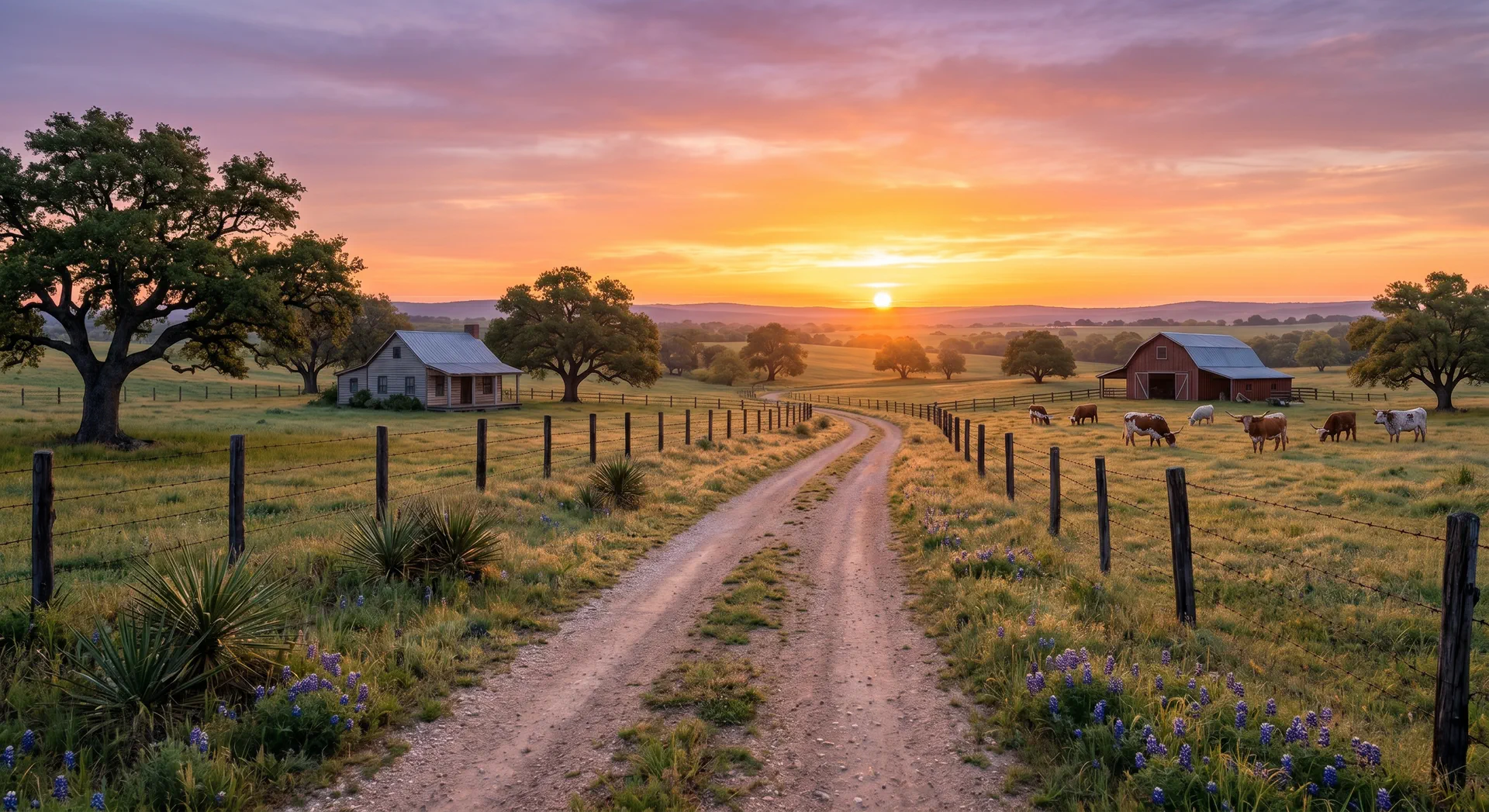
Learn how to buy rural land in Texas with this complete step-by-step guide. From defining your goals to closing day, get expert advice on financing, due diligence, and avoiding costly mistakes.
Buying land in Texas is nothing like buying a house. There is no MLS to scroll through over breakfast. There is no standard inspection checklist. And the financing works differently than anything your mortgage broker has ever handled.
That is what makes it exciting, and that is what catches first-time buyers off guard.
Whether you are looking for a hunting retreat in the Hill Country, a place to run cattle, or a quiet piece of ground to build on someday, this guide walks you through every step of the process so you can buy with confidence and avoid the mistakes that cost people thousands.
This sounds obvious, but it is the step most buyers rush past. Your intended use determines everything: how many acres you need, which counties to look in, what price range is realistic, and what kind of due diligence matters most.
Common uses for rural Texas land include:
Write down your top three priorities before you start looking at listings. It will save you from falling in love with property that does not actually fit your life.
Land pricing in Texas varies wildly by region. Far West Texas averages around $2,787 per acre. The Hill Country averages over $7,700. Development land near metro areas can exceed $10,000 per acre.
Beyond the purchase price, budget for:
If you are buying through owner financing, your upfront costs can be significantly lower. Some Texas land brokerages offer terms as low as 5% down with no credit check and no closing costs, making it possible to get on property for a fraction of what a bank would require.
This is not the time for a residential real estate agent. You need someone who specializes in rural land and knows the specific counties you are interested in.
A good land broker will:
Ask how many land transactions they have closed in the area. Ask if they own rural land themselves. The best brokers in this space are not just salespeople — they are landowners who understand what you are getting into.
Never buy rural land sight unseen. Photos and aerial maps are useful, but they cannot tell you:
Walk the property lines. Drive the roads at different times of day. If hunting is your goal, look for game trails, rubs, and feeding areas. If you are building, identify where the home site would go and whether it has the views and orientation you want.
Visit at least twice if possible, ideally in different weather conditions.
This is where rural land purchases differ most from residential real estate. There is no home inspection to fall back on. You are responsible for verifying everything about the property yourself, or hiring the right professionals to do it.
Confirm clear title with no outstanding liens, judgments, or encumbrances. A title company will handle this, but you should also ask about:
Get a current survey, even if one exists from a previous transaction. Boundaries shift, fences move, and old surveys may not reflect current conditions. A survey will also reveal:
Water is the single most important factor for rural Texas land. Verify:
Confirm the property has legal access from a public road. Some rural properties are landlocked and require easements across neighboring land to reach them. Verify:
Check availability and cost to connect:
Check FEMA flood maps for the property. High-risk flood zones require mandatory flood insurance and may restrict where you can build.
For larger tracts, consider:
Traditional bank financing for raw land is harder to get than a home mortgage. Banks typically require 20% to 50% down, charge higher interest rates, and offer shorter terms (5 to 20 years).
Your main options:
The seller acts as the lender. You make monthly payments directly to them. Benefits include:
Owner financing is especially common in the Texas rural land market and is often the fastest path to getting on property.
Organizations like Texas Farm Credit specialize in agricultural and rural land loans. They typically offer better terms than commercial banks for qualified buyers.
If you can buy outright, you will have the strongest negotiating position and the fastest closing. But tying up large amounts of capital in raw land means less liquidity for improvements.
Available but less common for raw land. Expect stricter requirements and higher costs.
Once you have completed your due diligence and are confident in the property, it is time to make an offer. In rural land transactions, offers are typically made through a real estate contract (often the TREC Farm and Ranch or Unimproved Property Contract in Texas).
Key negotiation points include:
At closing, you will:
For owner-financed purchases, you will also sign a promissory note and deed of trust outlining the payment terms.
After closing, take these immediate steps:
Skipping the survey. A fence line is not a property line. Surveys cost money but save you from boundary disputes that can cost far more.
Ignoring water. A beautiful piece of Hill Country land is worthless for building if you cannot get water at a reasonable depth. Always verify water availability before you buy.
Not checking mineral rights. If the minerals are severed, someone could legally drill on your surface. This is more common than most buyers realize in Texas.
Buying based on price per acre alone. A $2,000 per acre property with no water, no access, and heavy cedar is not a better deal than a $4,500 per acre property with a well, road frontage, and live oaks.
Rushing past the financing question. Compare owner financing terms to bank loan terms. In many cases, owner financing gets you on property faster with less money down, even if the interest rate is slightly higher.
Texas Land Brokerage specializes in rural land sales across the Hill Country, with owner financing available on most properties. Whether you are a first-time buyer or adding to an existing portfolio, we can help you find the right piece of Texas.
Browse our current properties or sign up to be the first to know when new listings hit the market.
Have questions about a specific property or need help understanding your financing options? Contact us — we are happy to walk you through it.
Texas Land Brokerage is a full-service land brokerage offering owner financing with as little as 5% down, no credit check, and terms up to 30 years. We specialize in hunting, ranch, and recreational properties across the Texas Hill Country.