Texas Ag & Wildlife Tax Exemptions: A Landowner's Complete Guide (2026)
How the Texas ag exemption and wildlife exemption lower your property taxes. Eligibility, the 5-of-7-year rule, the 7 wildlife practices, rollback taxes, and how to apply.
How the Texas ag exemption and wildlife exemption lower your property taxes. Eligibility, the 5-of-7-year rule, the 7 wildlife practices, rollback taxes, and how to apply.
If you own rural land in Texas, the single biggest lever on your annual property tax bill is whether the land carries an agricultural or wildlife valuation. The savings are not small. On most rural tracts, qualifying for one of these valuations drops the taxable value by 90 percent or more — the difference between a few hundred dollars a year and several thousand.
There is a lot of loose talk about the “ag exemption” and the “wildlife exemption,” and most of it gets the details wrong. Here is an accurate, plain-English breakdown of how both work in 2026, who qualifies, what it costs you to keep them, and how to apply — written for the buyers and landowners we work with every day.
Almost everyone calls it the “ag exemption,” and we will use that phrase here because it is what people search for. But technically it is not an exemption at all. It is a special method of appraisal.
A true exemption (like a homestead exemption) removes a chunk of value from the tax rolls. An agricultural or wildlife valuation does something different: it tells the county appraisal district to value your land based on its capacity to produce agricultural products — its “productivity value” — instead of its market value.
On a 100-acre Hill Country tract that might sell for $600,000, the productivity value the appraisal district assigns could be $15,000 to $40,000. You pay taxes on the lower number. That is where the savings come from, and it is why getting this right is one of the most important financial decisions a Texas landowner makes.
There are two paths to that lower valuation: the agricultural appraisal and the wildlife management appraisal. They land you in the same place on your tax bill. They just ask you to use the land differently.
This is the traditional path, governed by the Texas Constitution and the Texas Property Tax Code. Most people qualify under what is called 1-d-1 open-space valuation (as opposed to the much rarer 1-d valuation, which requires that farming or ranching be your primary occupation and income source).
To qualify for 1-d-1 open-space ag valuation, the land must meet three core tests:
Minimum acreage and intensity standards genuinely vary county to county. The first call you should make about any specific tract is to that county’s appraisal district.
Here is the part most recreational and hunting buyers care about. You do not have to run cattle to keep a low tax valuation. Texas allows you to convert an existing agricultural valuation to a wildlife management valuation — and the tax treatment is identical. Same productivity-based value, same savings.
This is ideal for the buyers we work with most: people who want a hunting property, a weekend ranch, or a legacy tract, and who would rather manage the land for deer, turkey, and quail than fence it for livestock.
The critical thing to understand: wildlife management valuation is a conversion, not a fresh start. The land must already qualify for (or carry) an agricultural valuation in the year before you switch. You cannot take raw land with no ag history straight to a wildlife valuation. You first establish the ag valuation, then convert.
To qualify, you implement and document at least three of these seven practices, all defined by Texas Parks & Wildlife:
You file a wildlife management plan (Texas Parks & Wildlife form PWD-885, by ecoregion — the Edwards Plateau has its own guidelines) with your county appraisal district, and you keep annual records of the practices you carried out.
The practical upside: the activities that qualify you for the wildlife valuation — feeders, water, food plots, brush management, deer surveys — are mostly the same things a serious hunter or land steward would do anyway. You get the tax break for improving your own property.
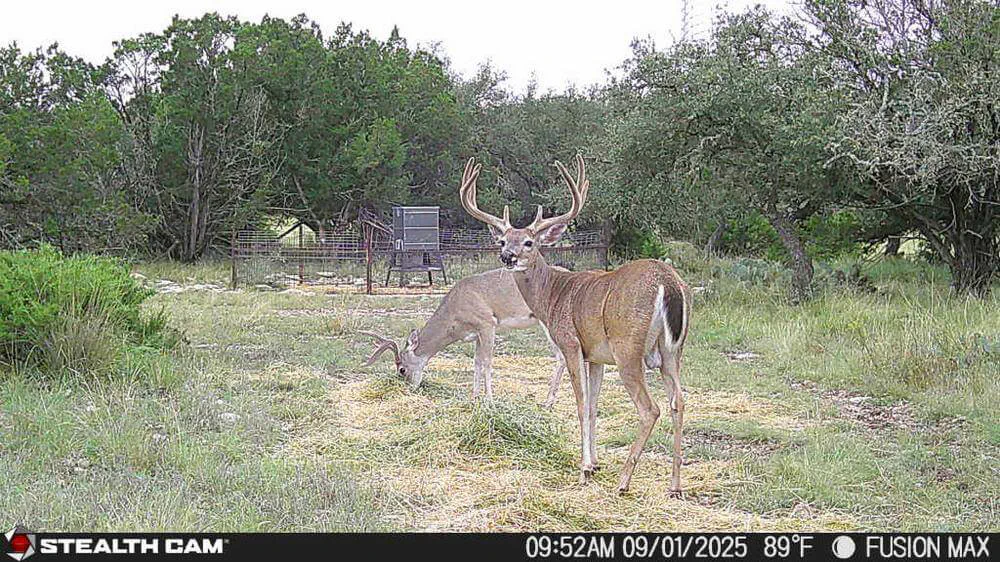
Several of our Edwards County tracts at Venado Creek Ranch already carry a wildlife management valuation, which means a new owner can step in and keep the low tax basis without starting from scratch — one of the most valuable and most overlooked features a hunting tract can have.
| Factor | Agricultural Valuation | Wildlife Management Valuation |
|---|---|---|
| Tax result | Productivity value (90%+ savings) | Same — identical tax treatment |
| Primary activity | Livestock, crops, hay, beekeeping | Managing native wildlife habitat |
| Prerequisite | 5 of past 7 years in ag use | Must already hold/qualify for ag valuation |
| What you do | Run cattle/goats, cut hay, keep bees | At least 3 of the 7 TPWD practices |
| Paperwork | Application to county appraisal district | Same application + TPWD wildlife plan (PWD-885) |
| Best for | Working ranches, hay operations | Hunting tracts, recreational & legacy land |
| Livestock required? | Yes (or another ag use) | No |
The headline: if you want the tax savings without the obligation of running livestock, the wildlife valuation is the tool. It is purpose-built for the recreational landowner.
This is the trap. If land carrying an ag or wildlife valuation is changed to a non-agricultural use — say you subdivide and develop it, or simply stop the qualifying activity — the county can assess a rollback tax. The rollback recaptures the difference between what you paid under the productivity valuation and what you would have paid at full market value, plus interest.
There was an important change in recent years. Under House Bill 1743, the rollback period was reduced from five years to three years, and the interest rate dropped from 7 percent to 5 percent. That makes the penalty meaningfully smaller than it used to be — but it is still real money, and it is the buyer’s responsibility to understand it.
Two things this means in practice:
One of the reasons owner financing fits Texas land so well is timing. When you close on an owner-financed tract in days rather than waiting 30 to 60 for a bank, you take title sooner — which can matter for the January 1 use test and the application calendar. And because you put as little as 5 percent down, you keep more cash available to fund the very activities (a feeder system, a water guzzler, a few head of livestock, a brush mulcher) that establish or maintain your qualifying use.
If you are weighing how to finance a tract, our breakdown of owner financing vs. bank loans for Texas land walks through the real numbers, and our step-by-step owner financing guide explains the mechanics.
Is the “ag exemption” really an exemption? No. It is a special-use appraisal that values your land on its agricultural productivity instead of market value. The result is a much lower tax bill, but it works differently from a true exemption like the homestead exemption.
How much can an ag or wildlife valuation save me? On most rural Texas tracts, the taxable value drops by roughly 90 percent or more. The exact savings depend on the county’s productivity values, your tax rate, and your acreage, but the difference is typically thousands of dollars per year.
Do I need livestock to get the tax break? No. The wildlife management valuation gives you the identical tax treatment without livestock — you manage the land for native wildlife instead. The catch is that the land must already qualify for an agricultural valuation before you convert it to wildlife use.
How many acres do I need? There is no single statewide minimum. Each county appraisal district sets degree-of-intensity standards and effective minimum acreage by use and region. Beekeeping has a specific 5-to-20-acre window. Always confirm with the county where the land sits.
What is the 5-of-7-year rule? For an open-space (1-d-1) agricultural valuation, the land must have been in qualifying agricultural use for at least five of the previous seven years. Buying a tract that already has an established valuation lets that history carry forward.
What is a rollback tax? If you change ag or wildlife land to a non-agricultural use, the county recaptures the tax savings — now for the previous three years plus 5 percent interest (reduced from five years and 7 percent under HB 1743). Keep the qualifying use going and you avoid it.
When is the application due? Generally before May 1 (by April 30) of the tax year, filed with the county appraisal district. Late filing is sometimes allowed with a penalty, but do not rely on it.
For the recreational, hunting, and legacy-land buyers we work with, the wildlife management valuation is one of the best deals in Texas land: the same 90-percent-plus tax savings as a working ranch, earned by doing the habitat work a good steward wants to do anyway. The keys are simple — buy land that already carries the valuation when you can, keep the qualifying use uninterrupted, document your practices, and file on time.
When you are evaluating a specific property, the two questions to ask first are: Does this tract currently carry an ag or wildlife valuation? and How long has it been in qualifying use? We answer both on every property we sell.
Browse our current Texas land listings — many already carry an ag or wildlife valuation — or contact us and we will walk the tract with you and explain exactly where it stands on taxes, use history, and what it takes to keep the valuation in place.
Sign up to be the first to know when new owner-financed Texas land hits the market.
Texas Land Brokerage specializes in Hill Country land sales with owner financing — 5% down, no credit check, terms up to 30 years. This article is general information, not tax or legal advice; confirm specifics with the county appraisal district and a qualified professional. Browse rural Texas land at texaslandbrokerage.com.