
How Owner Financing Works in Texas: A Step-by-Step Guide
How owner financing works for Texas land, step by step: the offer, the promissory note and deed of trust, closing in days, monthly payments, and paying off or refinancing.
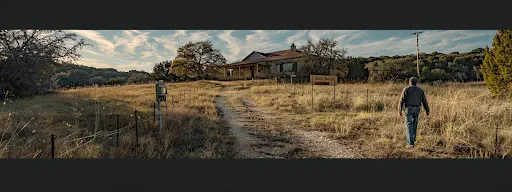
How owner financing works for Texas land, step by step: the offer, the promissory note and deed of trust, closing in days, monthly payments, and paying off or refinancing.
“How does owner financing actually work?” is the question we get more than any other. People understand the headline — the seller acts as the bank, you skip the credit check, you put a little down — but they want to know the mechanics. What do you sign? When do you own the land? Who do you pay? What happens if something goes wrong?
This guide walks through owner financing for Texas land the way it actually happens, step by step, from the first conversation to the day you own the property free and clear. No jargon without an explanation.
Looking for owner-financed land right now? See the terms and tracts on our owner financing page, or go straight to current Texas land listings — including Pinto Creek Ranches and Venado Creek Ranch.
In an owner-financed Texas land deal, the seller becomes your lender. Instead of getting a loan from a bank to pay the seller, you make payments directly to the seller over time. You sign a promissory note (your promise to pay) and a deed of trust (the document that secures the loan against the land), and — this is the part people miss — you take title to the property at closing, the same as you would with a bank loan. You own it from day one. The seller just holds a lien until you pay it off.
That structure is why owner financing is so common for Texas land, especially recreational, hunting, and Hill Country tracts that banks are reluctant to finance. Now here is how it unfolds.
It starts with the land. When a tract is offered with owner financing, the seller sets the terms. At Texas Land Brokerage, our standard terms are:
Other Texas sellers offer a range — some want 10 to 20 percent down, some pull credit, some add fees — so read every offer carefully. The interest rate on owner-financed land usually runs a point or two above a Farm Credit bank loan, which is the premium for the seller carrying the risk. We break down that trade-off in detail in owner financing vs. bank loans for Texas land.
Once you have picked a tract (or a specific lot within a larger ranch), you and the seller agree on:
Because there is no bank underwriting committee in the middle, this part moves fast. You are negotiating with the actual decision-maker. On a $400,000 tract, for example, 5 percent down is $20,000 — and the balance is amortized over the term you choose.

Here is where owner financing earns its reputation for being simple, with one nuance worth understanding.
For raw recreational land where no home is planned, the documentation is light and the deal moves quickly.
When owner financing is used for property that will be a residence, federal and state rules kick in. The federal Dodd-Frank Act and the Texas SAFE Act require that residential owner-financed loans be structured properly — fully amortizing (no surprise balloon payments), with a documented assessment of the buyer’s ability to repay. This is why professional Texas land sellers work with a licensed Residential Mortgage Loan Originator (RMLO) to prepare compliant loan documents. The RMLO is a good sign, not a hurdle — it means the deal is being done correctly and your loan terms are clean.
Two questions worth asking any owner-financing seller:
At closing, you sign two key documents:
At the same closing, the seller delivers a warranty deed transferring ownership to you. You take title to the land that day. Your name goes on the deed; it gets recorded at the county; the property is yours, subject to the seller’s lien.
This is the most important distinction in owner financing, so it is worth being precise:
Deed of trust vs. contract for deed. With a deed of trust, you own the land immediately and the seller holds a lien — exactly how a bank mortgage works. With a contract for deed (also called an executory contract or “land contract”), the seller keeps title until you finish paying, and you do not own the property in the meantime. Texas Property Code Chapter 5 heavily regulates contracts for deed on residential property. Texas Land Brokerage uses the cleaner deed-of-trust structure, so our buyers own their land from day one.

Because there is no bank appraisal, no underwriting queue, and no loan committee, owner-financed land deals close in days rather than the 30 to 60 days a Farm Credit or commercial land loan typically takes. When a tract you want comes up, that speed is the difference between locking it down and watching someone else close first.
After closing, you make monthly payments toward the note. Payments may go directly to the seller or, more commonly on professionally structured deals, to a third-party loan servicer that processes payments, tracks your balance, and sends statements — the same experience as paying a mortgage company.
Every payment chips away at principal and builds your equity in the land. You can do whatever you like with the property in the meantime within its deed restrictions — hunt it, camp on it, run a few head of livestock, drill a well, build a cabin (see the FAQ below on building).
Because our owner financing carries no prepayment penalty, you have options most bank borrowers do not:
When the note is paid in full, the seller (or servicer) files a release of lien at the county. The deed of trust is cleared, and you own the land outright with no encumbrance. Done.
Honest answer: communicate early and it is rarely a crisis. A deed-of-trust note in Texas does give the lender the right to foreclose if the loan goes into default, and Texas allows a relatively fast non-judicial (trustee’s sale) process. But foreclosing helps no one — a seller carrying the note would much rather keep a paying buyer on the land. If you hit a rough month, the right move is to call before the due date, not after. We work with our buyers, not against them.
Put the steps together and you can see why owner financing dominates the recreational and Hill Country land market:
For working ag operations at scale, a Farm Credit loan can still make sense — we lay out exactly when in our owner financing vs. bank loans comparison. But for the hunters, weekenders, first-tract buyers, and families building toward a legacy property, this is the faster, more flexible path.
How does owner financing work in Texas? The seller finances your purchase directly instead of a bank. You agree on price, down payment, rate, and term; sign a promissory note and a deed of trust at closing; take title to the land that day; and make monthly payments to the seller or a loan servicer until the note is paid off. At Texas Land Brokerage, terms are 5% down, no credit check, and up to 30 years.
Do I own the land right away with owner financing? Yes — when the deal is structured as a deed of trust (which is how we do it), you take title at closing and the seller simply holds a lien until you pay off the note. This is different from a contract for deed, where the seller keeps title until the final payment.
What credit score do I need to buy owner-financed land? None for our deals. We do not run a credit check. Owner financing is designed for buyers who are self-employed, have non-traditional income, or simply do not want a hard credit pull. Approval is based on the agreed terms and down payment, not a credit score.
How much down payment do I need? On Texas Land Brokerage tracts, as little as 5 percent. Other Texas sellers range from 10 to 20 percent or more, so always confirm the specific terms.
Can I build a home on owner-financed land in Texas? Generally yes, subject to the property’s deed restrictions and county rules. Because you own the land at closing under a deed of trust, you can improve it — including building — while you pay off the note. Confirm any restrictions and whether the seller requires notice before major improvements.
What is a deed of trust in Texas? It is the document that secures an owner-financed (or bank) loan against real estate. You hold title to the property; the lender holds a lien through the deed of trust. If the loan is paid, the lien is released; if it defaults, the deed of trust allows the lender to foreclose.
Is there a penalty for paying off owner financing early? Not on our loans. You can pay extra or pay off the full balance anytime with no prepayment penalty, which makes refinancing into a bank loan later a clean option.
The best way to understand owner financing is to run it on an actual property. Browse our current Texas land listings or read the full owner financing buyer’s handbook for the deeper details.
When you are ready, contact us and we will put real numbers in front of you — down payment, monthly payment, total cost — on any tract in our portfolio, and walk you through every step above.
Sign up to be the first to know when new owner-financed Texas land becomes available.
Texas Land Brokerage offers owner financing on most properties with as little as 5% down, no credit check, and terms up to 30 years. This article is general information, not legal or financial advice. Browse rural Texas land for sale at texaslandbrokerage.com.