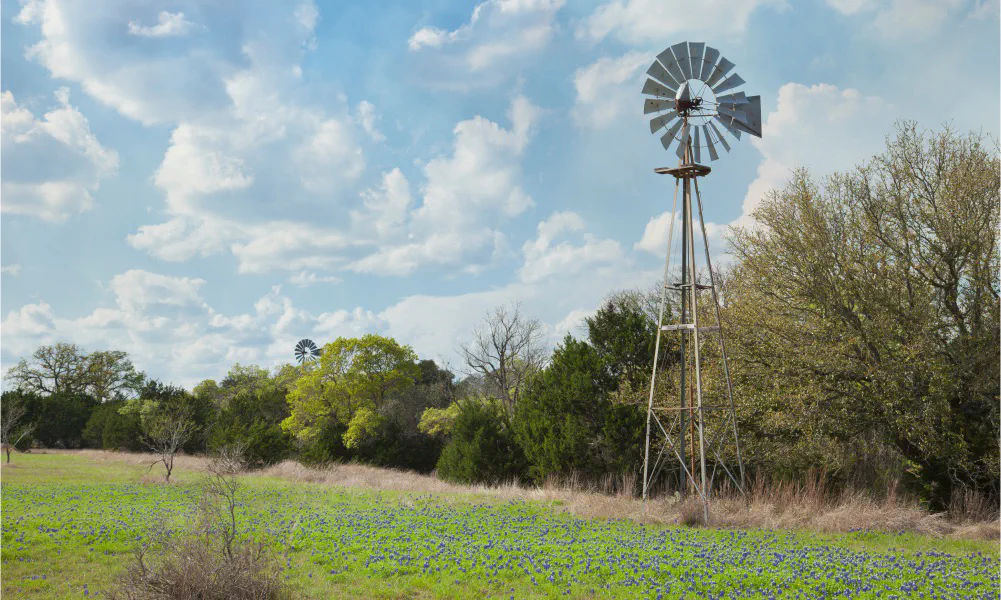
“Is it unrestricted?” is one of the first questions we hear from Texas land buyers — usually from someone who has spent years under an HOA that measured their grass, and never intends to ask anyone’s permission again.
It is the right instinct. But “unrestricted” is one of the most misunderstood words in Texas real estate, and buyers on both ends get burned by it: some pass up excellent tracts over harmless paper restrictions, and others pay a premium for “totally unrestricted” land only to discover the county still has plenty to say about their septic system.
Here is what unrestricted land actually means in Texas, what it does and does not let you do, how to verify what you are buying, and an honest take on when unrestricted is the right call — and when it is not.
What Does Unrestricted Land Mean?
Unrestricted land is property with no deed restrictions, no restrictive covenants, and no property owners’ association (POA/HOA) controlling how the land can be used. On a truly unrestricted Texas tract, no private agreement dictates what you can build, whether you can place a mobile home or RV, run livestock, hunt, subdivide, or operate a business. Government rules — septic permits, floodplain regulations, and water district rules — still apply.
That last sentence matters, so let’s take the two halves separately.
The Private Layer: Deed Restrictions, Covenants, and POAs
Most rules on rural Texas land are private, not governmental. When a ranch is subdivided, the developer typically records covenants and restrictions in the county deed records. These “run with the land” — they bind every future owner, whether or not your deed mentions them, and they commonly govern things like minimum home size, mobile homes, commercial use, further subdivision, and junk accumulation.
Sometimes there is also a POA or HOA — an actual organization with dues, architectural approval, and enforcement power. This is the layer most buyers are really trying to escape. A POA is an ongoing relationship; recorded covenants without a POA are just rules on paper, enforceable only by neighboring owners who would have to go to court.
“Unrestricted” means none of the above exist on the tract. Nothing recorded, nobody to answer to.
The Government Layer: What “Unrestricted” Does Not Exempt You From
Here is the part the listing ads skip. Texas is famously light on rural land regulation — counties in Texas generally cannot zone land, and in an unincorporated area there is usually no building permit and no building inspection for a house you build on your own land. That is real freedom, and it surprises buyers from almost every other state.
But even on fully unrestricted land, you should expect:
- Septic (OSSF) permitting. Every on-site septic system in Texas requires authorization from the county or its designated agent under TCEQ rules. This is the one permit nearly every rural build needs — our Texas septic systems and OSSF guide walks through it county by county.
- Floodplain rules. Counties administer FEMA floodplain regulations; building in a mapped floodplain triggers a development permit.
- Water well rules. In much of the state, a groundwater conservation district has spacing or registration requirements for new wells.
- Subdivision platting. Cutting a tract into smaller pieces to sell can trigger county platting requirements, especially near a city’s extraterritorial jurisdiction (ETJ).
- Ag/wildlife valuation requirements. Not a restriction on use, but if you want the tax savings, the appraisal district’s rules decide what activity keeps your ag or wildlife valuation intact.
So the honest definition of unrestricted Texas land is: no private rules, light public rules. You can build what you want, live how you want, hunt your own land, and never pay a dues statement — you just still need a septic permit like everyone else.
[IMAGE: Rolling unrestricted ranch land with a gated private entrance in West Texas]
Do I Need Permits to Build on Unrestricted Land?
In an unincorporated Texas county: generally no building permit for the structure itself, yes for the septic system, and yes if you are in a floodplain. No county inspector signs off on your framing. If the tract is inside city limits or a city’s ETJ, city rules can reach further — one more reason rural tracts well outside town carry a premium for independence-minded buyers.
(If you plan to finance the build or insure the home, your lender and insurer will impose their own standards — that is contract, not law, but plan for it.)
How to Find Out If Land Is Unrestricted
Never take “unrestricted” from an ad headline. Verify it in fifteen minutes:
- Ask for the recorded covenants up front. A legitimate seller will hand you the recorded restrictions or state plainly that none exist. We publish covenant documents directly on our listing pages.
- Read the title commitment. When you go under contract, the title company’s commitment (Schedule B) lists every recorded restriction, easement, and mineral reservation on the tract. This is the authoritative answer.
- Search the county clerk’s records. Deed restrictions are recorded in the county where the land sits; most Texas counties have online indexes.
- Walk the ground. Easements (pipelines, transmission lines, access roads) are restrictions in practice even when nobody calls them that.
The Honest Trade-Off: Unrestricted Is Not Always What You Want
Now the part few land ads will tell you. A tract’s restrictions do not just bind you — they bind your neighbors.
Buy a beautiful, fully unrestricted 15 acres, and the 15 acres next door is just as unrestricted: nothing stops a salvage yard, a hog-processing operation, or a cluster of derelict trailers from becoming your permanent view. We have watched it happen, and it is brutal on resale value.
This is why experienced Texas land buyers usually aim for the middle of the spectrum:
| Truly unrestricted | Light covenants, no POA | Full POA/HOA |
|---|
| Your freedom | Total | Near-total | Limited |
| Protection from neighbors | None | Solid | Strong |
| Dues and enforcement body | None | None | Yes |
| Resale story | Depends on neighbors | Strong | Depends on buyer |
Light covenants with no POA — basic rules that keep out junkyards and commercial nuisance, with no association, no dues, and no architectural committee — protect your investment while leaving you alone. That is exactly how our ranch developments are structured. At Venado Creek Ranch in Edwards County, for example, there are light recorded restrictions and no POA; the same is true at Pinto Creek Ranches in Kinney County — no POA or HOA, with short, common-sense covenants published right on the listing. You can hunt, build your home or cabin, run the tract for wildlife, and never attend a meeting or pay dues.
If your plans genuinely require zero recorded restrictions — say, a commercial operation — tell us that. It narrows the search, and we will point you at the right tracts rather than talk you out of it.
Where to Find Unrestricted Land for Sale in Texas
Genuinely unrestricted (or near-unrestricted, no-POA) acreage clusters in rural counties west and northwest of the Hill Country’s growth corridor — places like Edwards, Kinney, Sutton, Real, McCulloch, and Coke counties, where there is no zoning, no city ETJ for miles, and land is still priced by the acre instead of the square foot.
Most of our inventory pairs that independence with owner financing — no banks, no credit check, as little as 5% down — because the buyer who wants land without an HOA is very often the same buyer who wants land without a loan committee. Current examples:
- Pinto Creek Ranches — Kinney County, 110–329 acre tracts from $449,500. No POA/HOA, highway frontage, wells, and fiber. Full county guide here.
- Venado Creek Ranch — Edwards County near Junction, 97–195 acres from $646,086. Light restrictions, no POA, live oaks and fiber internet.
- Silver Creek Ranch — Coke County near San Angelo, from $59,500 — the affordable end of the no-POA spectrum.
Browse everything on our properties page, where each listing links its covenant documents so you can read exactly what does — and does not — bind the land.
Frequently Asked Questions
What does unrestricted land mean in Texas?
Land with no deed restrictions, no restrictive covenants, and no POA or HOA — no private party controls how you use it. Government requirements like septic permits, floodplain rules, and groundwater district rules still apply.
Can I do anything I want on unrestricted land?
Nearly. You can build without county building permits in unincorporated areas, place mobile homes or RVs, hunt, run livestock, and operate most businesses. You still need a septic permit to install a septic system, and floodplain or well rules can apply depending on the tract.
Do I need a permit to build a house on unrestricted land in Texas?
In an unincorporated county, generally no permit or inspection for the structure — but yes for the septic system (OSSF), and yes for construction in a mapped floodplain. Inside city limits or a city’s ETJ, municipal rules can apply.
How do I find out if land is unrestricted?
Ask the seller for recorded covenants, review Schedule B of the title commitment during your purchase, and search the county clerk’s deed records. Never rely on the listing headline alone.
Is unrestricted land worth more?
It typically commands a premium from buyers seeking maximum freedom — but tracts with light covenants and no POA often hold value better over time, because the covenants protect every owner in the development from value-killing uses next door.
Can unrestricted land have an ag exemption?
Yes. Agricultural and wildlife tax valuations depend on how the land is used, not on deed restrictions. Unrestricted tracts qualify the same way any tract does — see our ag and wildlife exemption guide.
The Bottom Line
Unrestricted land in Texas delivers something close to the freedom the word promises — no HOA, no architectural committee, no permission slips for your own property — with a short list of public-health rules that apply to everyone. Just verify the paper before you buy, and think hard about whether zero restrictions on your neighbors is actually in your interest.
Tell us what you want to do with your land — browse our owner-financed tracts or contact us and we will match you to properties whose restrictions (or lack of them) fit the plan.