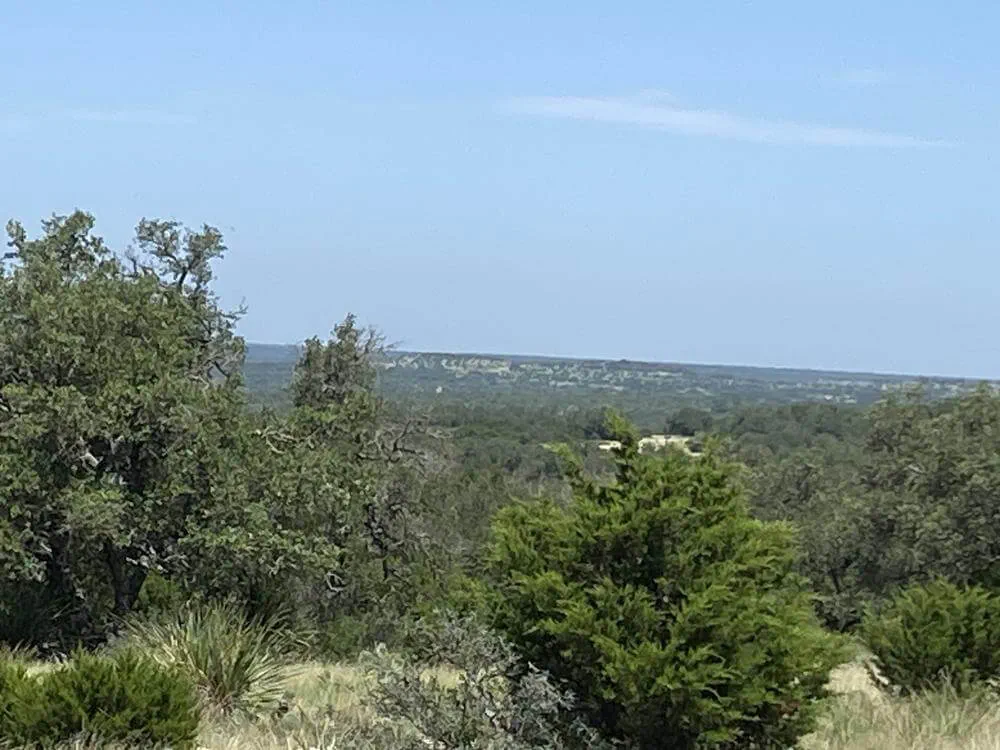
Everybody wants Hill Country land. That is exactly the problem. The 20-odd counties that make up the Texas Hill Country are the most searched-for rural real estate in the state, and the closer you get to Austin, San Antonio, and Fredericksburg, the more the price per acre looks like a house payment rather than a land payment.
The good news is that the Hill Country is a lot bigger than the wine-trail postcard version of it. Out on the western Edwards Plateau — Edwards, Kinney, Real, and Sutton counties — the same limestone hills, live oaks, and spring-fed creeks sell for a fraction of what they bring an hour closer to the interstate. That is where we work, and this guide is what we tell every buyer who calls us saying they want “something in the Hill Country.”
We will cover what actually counts as Hill Country, where the acreage is, how to judge water and terrain, what restrictions and taxes to check, what land really costs in 2026, and how to buy it without a bank.
What Counts as “The Hill Country”?
Geologically, the Hill Country is the eroded eastern and southern edge of the Edwards Plateau, a raised limestone tableland that stretches from the Balcones Escarpment (roughly I-35 from Austin to San Antonio) west toward the Pecos. The hills you see around Kerrville, Bandera, and Fredericksburg are what happens where that plateau breaks down into canyons and river valleys.
In practice, “Hill Country” means:
- The eastern core — Gillespie, Kerr, Kendall, Blanco, Hays, Comal, Bandera. Fredericksburg wineries, Kerrville, Wimberley. The most developed, most expensive, most subdivided part of the region.
- The western Plateau — Edwards, Kinney (northern), Real, Sutton, Kimble, Val Verde (northern). Same limestone, same live oaks, same creeks, far fewer people. Rocksprings, Junction, Leakey, Sonora, Camp Wood.
Both are Hill Country. Only one of them still sells ranch-sized tracts at ranch prices.
East vs. West: Where the Acreage Is
Think of Hill Country land value as a set of rings around Austin and San Antonio. Inside the first ring — an hour or so from either city — most land has already been cut into 5- to 20-acre homesites, and pricing is driven by residential demand, not by what the land can do. Two hours out, tracts get bigger, restrictions get lighter, and the per-acre number drops sharply. Past that, on the western Plateau, you are in working ranch country where 100 to 300 acres is a normal purchase rather than a trophy.
That gradient is why our inventory sits where it does. Venado Creek Ranch is in the northeast corner of Edwards County, about 20 minutes from Junction and an easy drive to Kerrville and Fredericksburg. Pinto Creek Ranches sits on the southern Plateau in northern Kinney County, 40 minutes from Rocksprings and under two hours from San Antonio. Both are unmistakably Hill Country — live oaks, rolling limestone, dry creeks — and both sell tracts of 100 to 300-plus acres to buyers who could not touch 20 acres near Fredericksburg for the same money.
If you want to be within 45 minutes of Whole Foods, buy east and buy small. If you want a ranch, drive west.
Water: The Question That Decides Everything
Hill Country water is a story of extremes. The region is defined by its rivers — the Llano, Frio, Nueces, Guadalupe, Sabinal, and their tributaries — and many of them begin as springs on the Plateau. Land with live water, a spring, or even a reliable wet-weather creek carries a premium over dry ground that never goes away.
Groundwater is the other half of the equation. Because the Plateau sits high, wells are often deeper than in the lowlands and drilling costs scale with depth, which is why an existing, producing well is worth real money on a Hill Country tract. Both Venado Creek and Pinto Creek have wells already in place on every remaining tract, plus ponds, tanks, and wet-weather creeks at Pinto Creek.
Before you buy any Hill Country land, know:
- Is there a well, and what does it produce? Ask for the driller’s log, depth, and yield. Our guide to buying land with a well and septic walks through how to verify both.
- What surface water is there, and how reliable is it? Live water, seasonal creek, stock tank, or nothing. Walk it after a dry spell, not just after a rain.
- Which groundwater conservation district covers the tract? Most Hill Country counties have one, and the rules for new wells vary.
Terrain and Trees: Live Oaks vs. Cedar
Two tracts can sit side by side on the same ranch and be worth very different money based on what is growing on them. Buyers pay for big live oaks on gently rolling, usable ground. They discount steep canyon slopes, thin rocky caliche, and, above all, solid cedar (Ashe juniper) thickets.
Cedar is not just ugly. It crowds out grass, drinks the water that would otherwise reach your creek or recharge your well, and clearing it is a real expense that scales with density and terrain. A tract that has already been selectively cleared — leaving the oaks, opening the grass, keeping some cedar for wildlife cover — has had thousands of dollars of work done for you.
This is the single biggest reason we talk about Venado Creek the way we do: the ranch is live-oak country with minimal cedar, gently rolling, and highly usable. Pinto Creek carries the same profile — large live oaks over rolling terrain that is workable rather than rough and rocky. Neither requires you to buy a skid steer before you can enjoy the land.
Access, Utilities, and Fiber Internet
The romantic version of Hill Country land involves a long caliche road. The practical version involves maintaining that road every time it rains. Paved frontage matters more than most first-time buyers expect, both for your daily use and for resale.
Utilities matter just as much. Electricity at the road is one thing; electricity at every tract with high-speed fiber internet is a different category of land, because it turns a hunting camp into a place you can live and work. Both Venado Creek and Pinto Creek have electricity and fiber on the tracts, and every Pinto Creek tract has private, gated highway frontage on RM 674 — no dirt roads, no county-road travel.
When you compare tracts, price the infrastructure honestly. A well, a meter, fiber, and a paved gate can easily represent a large share of what you would spend to develop a bare tract, and they are already sitting there on the improved one.
Restrictions: Unrestricted, Light Covenants, or Full Subdivision
Texas counties do not zone rural land, so the restrictions that govern what you can do come from the deed. In the eastern Hill Country, most tracts sit inside subdivisions with a property owners’ association (POA), architectural review, and rules about everything from minimum square footage to how many goats you can keep. On the western Plateau, you will find everything from fully unrestricted land to ranches with a short, sensible set of covenants that protect property values without a POA to enforce them.
Read the restrictions before you fall in love with the view. Our guide to unrestricted land in Texas explains the spectrum. Pinto Creek Ranches, for example, carries light covenants but no POA and no HOA — you can build a home, a barndominium, or a hunting camp and run your own livestock and wildlife program without asking a committee. Venado Creek follows the same light-covenant model.
Taxes: Agricultural and Wildlife Valuations
Hill Country ranch land almost always carries an agricultural (1-d-1 open-space) valuation, which taxes the land on its productive value rather than market value — often the difference between a tax bill in the hundreds and one in the thousands. The valuation stays with the land when you buy it, as long as you keep qualifying.
Most recreational buyers do not want to run sheep or goats, and Texas does not make them. If a tract carries an ag valuation, you can convert it to a wildlife-management valuation by filing a management plan and carrying out at least three of the seven qualifying practices (habitat control, supplemental water, supplemental food, providing shelter, predator control, erosion control, and census counts). Our Texas ag and wildlife exemption guide covers the whole process, including the rollback-tax trap if you let the valuation lapse.
Venado Creek Ranch already has a wildlife exemption in place, so the tax side is handled the day you close. Pinto Creek tracts carry an agricultural valuation that qualifies for the same conversion.
What Hill Country Land Costs in 2026
There is no single Hill Country price. Small homesites in Gillespie, Kerr, and Kendall counties trade at figures per acre that would buy an entire ranch tract farther west, and even within the western Plateau, water, trees, access, and utilities move the number substantially. Rather than quote a regional average that would be wrong for every specific tract, here is what our current western Hill Country inventory looks like:
- Venado Creek Ranch (Edwards County): four open tracts remain of fourteen, running 121 to 150 acres, each with a well and electricity, fiber, highway or county-road frontage, big live oaks, minimal cedar, and the wildlife exemption in place. Tract 3 (121 acres) is listed at $635,250 on the current pricing sheet.
- Pinto Creek Ranches (Kinney County): five tracts remain of nine, running 135 to 329 acres, every one with a water well, electricity, fiber, and gated blacktop frontage. Tract 6 (135 acres) is listed at $449,500 on the current pricing sheet.
Both ranches put improved, live-oak Hill Country land with water and utilities in the range of a few thousand dollars per acre — a number that has not existed in the eastern Hill Country for a long time.
Financing: Why Owner Financing Fits Hill Country Land
Banks are not built for rural land. A conventional land loan typically wants a large down payment, a strong credit file, an appraisal that can take weeks on a property with no comparable sales, and a term that is often far shorter than a home mortgage. On a $500,000 ranch tract, the down payment alone can run well into six figures.
Owner financing removes the bank. At Texas Land Brokerage we finance our Hill Country tracts directly: as little as 5% down, no credit check, terms up to 30 years, and no prepayment penalty. You receive a deed at closing, we record a deed of trust securing the note, and we typically close in days rather than weeks. At 5% down, Tract 6 at Pinto Creek is roughly $22,475 to get in; Tract 3 at Venado Creek is roughly $31,763.
Read exactly how owner financing works in Texas, see how it compares to a bank land loan, and, if credit is the reason you have not bought yet, read how to buy land in Texas with no credit check.
Owner-Financed Hill Country Ranches Available Now
Venado Creek Ranch — Edwards County, near Junction. Premium northeast Edwards County Hill Country, about 20 minutes from Junction and the Llano River, with Kerrville and Fredericksburg an easy drive. Gently rolling terrain, an abundance of large live oaks, minimal cedar, and the hard-to-find combination of highway or county-road frontage, electricity, fiber, and wells. Whitetail, axis, blackbuck, turkey, and hogs. Wildlife exemption in place. Ten of fourteen tracts are sold; four remain. Read the Edwards County Land Guide.
Pinto Creek Ranches — Kinney County, near Rocksprings. Hill Country ranch land on the southern Edwards Plateau, under two hours from San Antonio. Every tract has private, gated frontage on paved RM 674, electricity, fiber internet, and a water well, with ponds, tanks, and wet-weather creeks throughout. Whitetail, axis, fallow, blackbuck, aoudad, turkey, hogs, quail, and dove. No POA or HOA. Four of nine tracts are sold; five remain, 135 to 329 acres. Read the Kinney County Land Guide.
For a look at the western edge of the Plateau near Sonora, see Sutton 860 Ranch and the turnkey 463 Ranch Headquarters, or browse all current listings.
A Hill Country Buyer’s Checklist
Before you make an offer on any Hill Country tract, confirm:
- Water — well depth and yield (driller’s log), surface water and its reliability, and the groundwater district rules
- Trees and terrain — how much usable ground, how much cedar, and what clearing has already been done
- Access — paved or caliche, deeded or easement, who maintains it
- Utilities — electricity and fiber at the tract, not just “available in the area”
- Restrictions — read the covenants; know whether there is a POA
- Taxes — current valuation, whether it transfers, and what it takes to keep it
- Survey and title — a current survey, clear title, and, on owner-financed land, a recorded deed of trust
- Financing — what it actually takes to close, and how fast
We walk through every one of these on-site with our buyers. It is the fastest way to know whether a tract is right.
Frequently Asked Questions
Where is the cheapest land in the Texas Hill Country?
Generally the western Edwards Plateau — Edwards, Kinney, Real, Sutton, and Crockett counties. The same live oaks, limestone hills, and creeks sell for a fraction of the per-acre price found within an hour of Austin, San Antonio, or Fredericksburg, and tracts are large enough to function as real ranches rather than homesites.
Is Texas Hill Country land a good investment in 2026?
Improved land with water, utilities, and paved access on the western Plateau has held value well because supply of large, usable tracts keeps shrinking as ranches are subdivided. Buyers who purchase at western-Plateau prices with fiber and wells already in place hold a product the eastern Hill Country stopped producing years ago.
How many acres do I need in the Hill Country?
It depends on the use. Ten to twenty acres works for a homesite. Serious hunting and wildlife management generally start around 100 acres, and larger tracts hold game better and offer more privacy. Our Venado Creek tracts run 121 to 150 acres and our Pinto Creek tracts 135 to 329 acres.
Can I build a house on Hill Country ranch land?
Yes. Texas counties do not zone rural land, so the only limits come from deed restrictions. Our Pinto Creek and Venado Creek tracts allow homes, barndominiums, and cabins, with electricity and fiber internet already at the tract, and neither ranch has a POA or HOA.
What is the best owner-financed land in the Texas Hill Country?
The best owner-financed Hill Country land combines four things: water in place, live oaks on usable ground, paved access with electricity and fiber, and light restrictions without a POA. Right now that describes Venado Creek Ranch in Edwards County and Pinto Creek Ranches in Kinney County, both financed directly by Texas Land Brokerage with 5% down and no credit check.
How does owner financing work on Hill Country land?
You put down as little as 5%, sign a promissory note secured by a recorded deed of trust, and receive a deed at closing — no bank, no credit check, terms up to 30 years, and no prepayment penalty. We typically close in days.
Do Hill Country tracts come with an ag exemption?
Most ranch tracts carry an agricultural (1-d-1) valuation that transfers with the land as long as you keep qualifying. Recreational buyers can convert it to a wildlife-management valuation. Venado Creek already has a wildlife exemption in place.
Ready to Walk the Hill Country?
The Hill Country you are picturing still exists — you just have to drive past the subdivisions to find it. Browse the remaining tracts at Venado Creek Ranch and Pinto Creek Ranches, see our full Texas land listings, or contact us to schedule a showing. We will walk the water, the trees, and the fence lines with you and answer every question about the land and the financing.
Texas Land Brokerage specializes in Texas land sales with owner financing — 5% down, no credit check, terms up to 30 years. Browse properties at texaslandbrokerage.com.