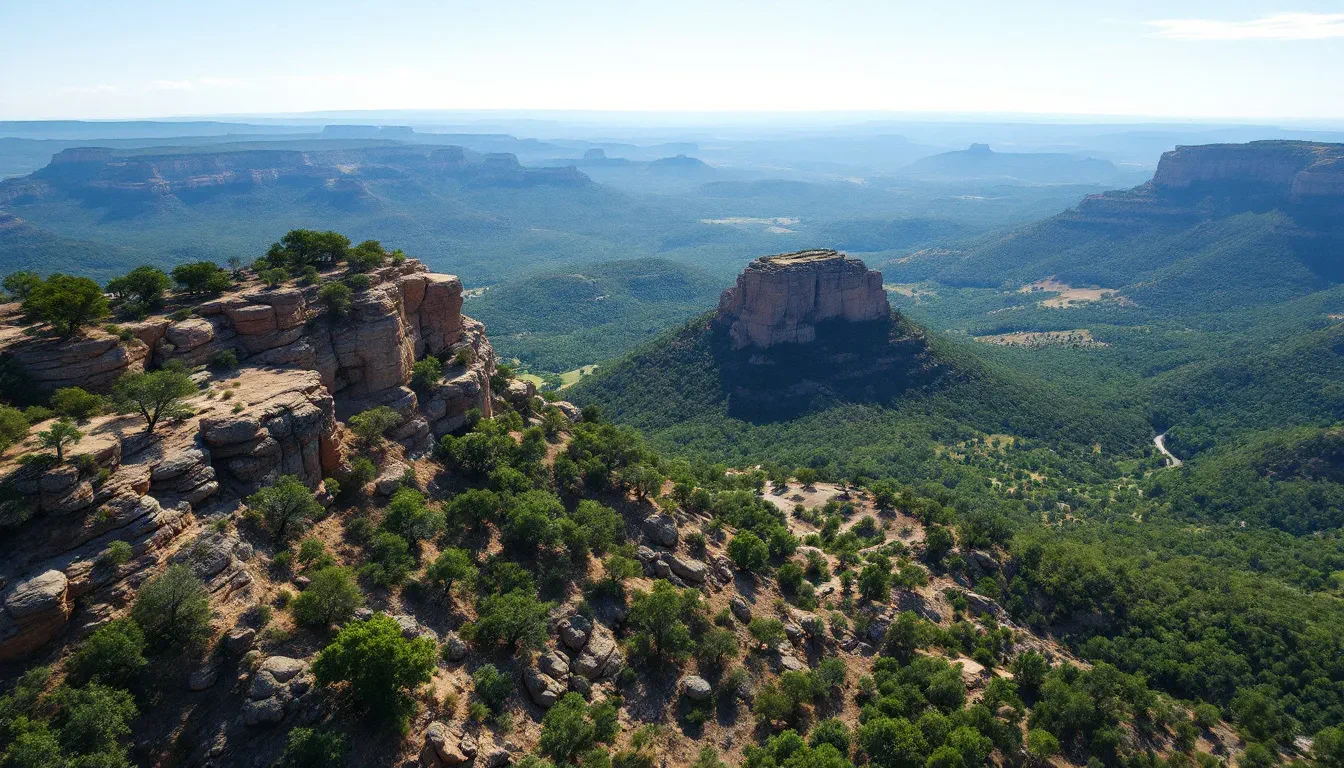
“How much is an acre of land in Texas?” is one of the most searched questions about Texas real estate, and the honest answer is that there is no single number. An acre of irrigated farmland near Houston, an acre of live-oak Hill Country ranch land, and an acre of desert grassland in far West Texas are three different products that happen to share a unit of measure. Statewide averages hide that.
This guide gives you the real figures: the statewide median, the median price per acre in each of the seven Texas land regions as tracked by the Texas Real Estate Research Center at Texas A&M, what actually moves the price on a specific tract, where land is still affordable, and, because averages are not something you can buy, what our own owner-financed ranch tracts cost per acre right now.
Shopping, not researching? Browse current owner-financed Texas land listings, all available with 5% down and no credit check.
The Short Answer
As of the end of 2025, the median price of rural land in Texas was about $5,214 per acre, up 6.56% from a year earlier, according to the Texas Real Estate Research Center’s fourth-quarter 2025 rural land report. The Center’s first-quarter 2026 update put the figure at $5,246 per acre, up 6% year over year.
That statewide number is weighted by land area, so it leans toward the big, inexpensive tracts of West Texas. In the regions where most people actually want to buy, prices run from roughly $3,000 to more than $11,000 per acre.
Texas Land Prices by Region (Year-End 2025)
The Texas Real Estate Research Center divides the state into seven land market regions and reports a rolling four-quarter median price per acre for each. These are the most recent full-year figures, published February 2026.
| Region | Median price per acre | Change vs. prior year | Typical tract size |
|---|
| 1. Panhandle and South Plains | $1,832 | −1.6% | 379 acres |
| 2. Far West Texas | $751 | +20.4% | 11,436 acres |
| 3. West Texas | $2,878 | +13.5% | 389 acres |
| 4. Northeast Texas | $9,159 | +2.2% | 120 acres |
| 5. Gulf Coast and Brazos Bottom | $11,502 | +10.6% | 129 acres |
| 6. South Texas | $6,107 | +4.1% | 292 acres |
| 7. Austin, Waco, and Hill Country | $7,911 | +8.2% | 201 acres |
| Texas statewide | $5,214 | +6.6% | 1,578 acres |
Source: Texas Real Estate Research Center, Texas Rural Land Markets, Fourth Quarter 2025. Figures are four-quarter moving medians of verified sales and are intended to show general trends, not to value a specific property.
A few things jump out of that table.
- The cheapest land is the most remote. Far West Texas at $751 per acre sounds like a bargain until you notice the typical sale is more than 11,000 acres with no utilities and limited water. Very few people are buying 40 acres of it.
- Proximity to the big metros sets the ceiling. The Gulf Coast and Northeast Texas regions, within reach of Houston and Dallas-Fort Worth, are the most expensive per acre, and their typical tracts are the smallest.
- The Hill Country region is the most active market in the state, with more than a thousand sales in the rolling year and prices up more than 8%. Demand for scenic recreational land keeps pushing the median higher.
- West Texas is rising fastest in percentage terms, up 13.5% to $2,878, which the Center attributes partly to speculation around data-center and energy land. It remains the lowest-cost region where you can still buy a usable tract with power.
Why Two Tracts in the Same County Sell for Very Different Prices
Regional medians tell you the neighborhood. They do not tell you what a specific tract is worth. These are the factors that move the price per acre of Texas land the most, roughly in order.
Tract size. Smaller tracts almost always sell for more per acre than larger ones. A 10-acre homesite can trade at several times the per-acre price of the 300-acre ranch next door. If you want the lowest price per acre, buy more acres.
Water. A producing well, a live creek, a spring, or river frontage adds real money that never goes away. Dry land with no well and deep groundwater is discounted accordingly. In the Hill Country, well depths and the cost to drill vary enormously, so an existing well is worth checking carefully. Our well and septic guide explains how.
Utilities and access. Electricity at the tract, fiber internet, and paved or deeded road access are what turn raw land into land you can actually use. Land that requires a long private road, a power line extension, or an unrecorded easement sells for less, and for good reason.
Trees and terrain. Live oaks on usable rolling ground command a premium in the Hill Country. Dense cedar, steep canyons, or flood-prone bottoms cost money to clear or cannot be used, and buyers price that in.
Location within the region. The closer to Austin, San Antonio, Dallas, or Houston, the higher the price. An hour’s drive can double the per-acre number inside the same region. This is why the western Edwards Plateau sells the same limestone hills and live oaks for a fraction of what they bring near Fredericksburg. Our Hill Country buyer’s guide covers that gradient in detail.
Restrictions and improvements. Unrestricted land or land with light covenants trades differently from lots in a platted subdivision with a property owners’ association. Existing improvements such as cabins, barns, fences, and pens add value when they are usable. Read more in our guide to unrestricted land in Texas.
Tax valuation and wildlife. A tract that carries an agricultural or wildlife-management valuation costs far less to hold each year, which supports its price. Strong native and exotic game populations add value to hunting land. See our ag and wildlife exemption guide for how the valuations work.
Minerals. Whether the mineral estate conveys with the surface matters in oil and gas country and can change the price meaningfully.
Where Land Is Still Affordable in Texas
If your goal is usable land, with power, access, and a reasonable path to water, at the lowest price per acre, the data points you west of the I-35 corridor and away from the metro rings.
- West Texas (Region 3), including the San Angelo area and counties such as Coke, offers a median under $3,000 per acre, with electricity and shallow groundwater on many tracts. This is where our Silver Creek Ranch tracts in Coke County sit, starting at $59,500 for 16 acres. Our Coke County land guide covers the area.
- The western Edwards Plateau, the Hill Country counties of Edwards, Kinney, Real, and Sutton, delivers true Hill Country land at well below the regional median, because it is two hours from San Antonio rather than one. Large tracts of 100 to 300 acres are still normal here, which keeps the per-acre price down.
- The Panhandle and South Plains are inexpensive but largely farm and grazing land with few recreational buyers.
“Cheap land in Texas” searches usually surface two kinds of listings: remote desert acreage with no utilities, or very small lots in speculative subdivisions. Both can be legitimate purchases, but neither is what most buyers picture. Affordable land that you can drive to, hunt, build on, and get power to is generally going to cost a few thousand dollars an acre. The way most of our buyers make that affordable is not by finding a cheaper acre; it is by financing it without a bank.
What Owner-Financed Texas Land Actually Costs Per Acre Right Now
Averages are useful for context, but you cannot buy an average. Here is what our current inventory works out to per acre, based on the listed tract prices as of October 2026. Every one of these tracts is available with owner financing: 5% down, no credit check, terms up to 30 years, and no prepayment penalty.
| Property | County | Tract | Price | Approx. price per acre |
|---|
| Silver Creek Ranch | Coke | Tract 34, 16 acres | $59,500 | $3,719 |
| Silver Creek Ranch | Coke | Tract 4, 20.3 acres, electric on site | $79,750 | $3,929 |
| Silver Creek Ranch | Coke | Tract 5, 27.2 acres, electric and barns | $107,440 | $3,950 |
| Pinto Creek Ranches | Kinney | Tract 6, 135 acres, well, electric, fiber, paved frontage | $449,500 | $3,330 |
| Sutton 860 Ranch | Sutton | 161 acres, electric, well, cabin | $595,000 | $3,600 |
| Venado Creek Ranch | Edwards | Tract 3, 121 acres, well, electric, fiber, live oaks, wildlife exemption | $635,250 | $5,250 |
| 463 Ranch Headquarters | Val Verde | 258 acres with cabins and utilities | $1,069,000 | $4,129 |
Two things worth noticing. First, every ranch tract on that list is at or below the Hill Country regional median of $7,911 per acre, and most are below the statewide median, even though they come with electricity, fiber internet, and in most cases a water well already in place. That is the western-Plateau discount in real numbers. Second, the per-acre figure rises as the tract gets smaller and as water and improvements get better, exactly as the factors above predict. Venado Creek’s price reflects big live oaks, minimal cedar, a well on the tract, and a wildlife exemption already in place in one of the most sought-after corners of Edwards County.
Smaller homesite-style tracts such as our 1.67-acre riverfront lot at Frio Cañon in Real County, listed at $499,000, show the other end of the curve: on a small, improved, river-frontage parcel, the per-acre figure stops being a useful measure at all. You are buying the river, not the acre.
Price Per Acre Is Not the Price You Pay to Get In
The number that decides whether most people can buy land is not the price per acre. It is the down payment.
A bank land loan commonly requires a large down payment, strong credit, an appraisal, and a term far shorter than a home mortgage. On a $450,000 ranch tract, that can mean six figures in cash before you own anything. Owner financing changes the math completely. At 5% down:
- Silver Creek Tract 34 ($59,500) is about $2,975 down.
- Pinto Creek Tract 6 ($449,500) is about $22,475 down.
- Sutton 860 Ranch ($595,000) is about $29,750 down.
- Venado Creek Tract 3 ($635,250) is about $31,763 down.
You receive a deed at closing, we record a deed of trust securing the note, and we typically close in days rather than weeks. Read exactly how owner financing works in Texas, or compare it with a bank land loan.
Are Texas Land Prices Going Up or Down in 2026?
Up, but more slowly than during the 2021 to 2023 run. Statewide prices rose about 6% year over year through both the fourth quarter of 2025 and the first quarter of 2026, and the Texas Real Estate Research Center’s 2026 outlook calls for small price increases with a slight dip in total acres sold as typical tract sizes shrink. The Center also notes a standoff in parts of the market: some sellers are still anchored to peak-era asking prices while buyers wait, which is why well-priced tracts sell and overpriced ones sit.
For buyers, the practical takeaway is that waiting for Texas land to get cheaper has not worked for a long time, and the supply of large, usable, improved tracts in the Hill Country keeps shrinking as ranches are subdivided. For sellers, pricing off closed sales rather than asking prices is what moves land in this market; our guide to how to sell land in Texas covers that side.
Frequently Asked Questions
How much is an acre of land in Texas in 2026?
The statewide median was $5,214 per acre at the end of 2025 and $5,246 in the first quarter of 2026, according to the Texas Real Estate Research Center. Regional medians range from $751 per acre in Far West Texas to $11,502 in the Gulf Coast and Brazos Bottom region, with the Hill Country region at $7,911.
Where is the cheapest land in Texas?
By median price, Far West Texas at $751 per acre, followed by the Panhandle and South Plains at $1,832 and West Texas at $2,878. For usable land with electricity and reasonable access, West Texas and the western Edwards Plateau are generally the most affordable options, with ranch tracts available in the $3,000 to $4,000 per acre range.
How much does an acre cost in the Texas Hill Country?
The Austin, Waco, and Hill Country region had a median of $7,911 per acre at year-end 2025, but prices vary widely. Small tracts near Fredericksburg, Kerrville, and Austin trade far above that, while larger ranch tracts on the western Edwards Plateau in Edwards, Kinney, Real, and Sutton counties are available for roughly $3,300 to $5,300 per acre with wells, electricity, and fiber in place.
Why do small tracts cost more per acre than large ones?
Because more buyers can afford a small tract, and because the cost of road, utilities, survey, and marketing is spread across fewer acres. A 10-acre lot may sell for several times the per-acre price of a 300-acre ranch in the same county.
Are Texas land prices going up in 2026?
Yes, modestly. Statewide prices were up about 6% year over year through the first quarter of 2026, with the strongest gains in West Texas and the Hill Country region. The Texas Real Estate Research Center expects small continued increases.
How much down payment do I need to buy land in Texas?
Bank land loans often require a large down payment, frequently far more than a home mortgage. Owner-financed land from Texas Land Brokerage requires as little as 5% down with no credit check, which puts a 16-acre tract at under $3,000 down and a 135-acre Hill Country ranch tract at about $22,500 down.
Is buying land in Texas a good investment?
Rural Texas land prices have risen for years, and the Hill Country region is the most active land market in the state. Improved tracts with water, utilities, and access have held value best. Like any real estate, returns depend on buying at a sensible price and on the land’s usability, so compare per-acre prices against the factors that drive them rather than against a statewide average.
See What Your Budget Buys
Pick a region, decide how many acres you need, and compare real tracts rather than averages. Browse our owner-financed Texas land for sale, read how owner financing works, or contact us and we will walk you through what is available at your price.
Texas Land Brokerage specializes in Texas land sales with owner financing: 5% down, no credit check, terms up to 30 years. Browse properties at texaslandbrokerage.com.